Global Bearing: The Compressor


An Analysis of the Strategic Shift from Tropical Latitudes to Polar Exploration.
A subtle but significant recalibration is underway in the disposition of the world's most significant maritime assets. For generations, the compass of desire pointed unwaveringly towards the temperate glamour of the Mediterranean and the Caribbean. The value of a vessel was, in large part, measured by its suitability for the enclaves of Monaco and St. Barths.
That needle is beginning to deviate.
A growing cohort of principals is commissioning, acquiring, and chartering vessels built not for the harbour, but for the horizon. The emerging strategic focus on high-latitude expedition vessels is not a fleeting trend; it is a fundamental correction in the definition of maritime value. The data confirms this shift: the global explorer yacht fleet has grown by over 25% in the last decade, with a record number of explorer vessels currently in build [Superyacht Times]. This is driven by a confluence of new technologies, a generational shift in purpose, and the search for the last true luxury: absolute solitude.
THE DRIVING FORCES
The migration towards polar and remote latitudes is underpinned by three core factors.
First is the dilution of exclusivity in traditional cruising grounds. For a certain class of owner, true luxury is no longer found in being seen, but in not being found at all. The Antarctic Peninsula and the Northwest Passage have become the new Côte d'Azur—enclaves defined not by crowds, but by their profound absence.
Second is a generational re-prioritization of purpose. An emerging class of principals view their vessel less as a platform for leisure and more as a platform for legacy. The yacht is a tool for scientific research and tangible philanthropic endeavors. The most prominent example of this ethos is the 182.9-metre research expedition vessel (REV Ocean), commissioned by Norwegian industrialist Kjell Inge Røkke. It is an asset built with the explicit dual purpose of private use and providing a cost-free platform for scientists to research critical ocean issues [Boat International]. This is a strategic investment in a new kind of return.
Finally, this shift is enabled by significant technical advancements. The development of highly efficient, Polar Code-compliant hulls from Northern European shipyards has removed traditional barriers of risk. Damen Yachting's SeaXplorer series, for instance, offers vessels like the 76.9-metre La Datcha, built to IMO Polar Code B standards, capable of operating for 40 days without a port call, fundamentally changing the calculus of remote exploration [Damen Yachting].
MARKET & ASSET IMPLICATIONS
This strategic shift is creating clear ripples in the acquisition and disposition markets.
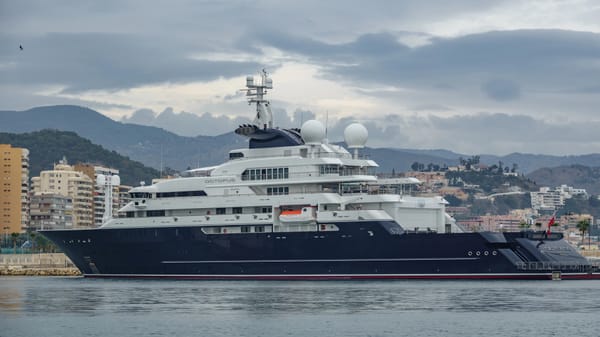
The valuation of true explorer hulls is appreciating at a notable rate. This has also ignited a secondary market for the complex conversion of robust commercial hulls. The 126.2-metre Octopus, originally built for Microsoft co-founder Paul Allen and now part of the charter fleet, set the benchmark for this class. More recently, the conversion of the 77-metre offshore supply vessel Edda Fjord into the arctic explorer Ragnar by Icon Yachts demonstrates the strategic opportunity for principals with a specific vision [Icon Yachts].
These are not merely refits; they are ground-up reconsiderations of a vessel's purpose, demanding immense capital but resulting in an asset of unparalleled capability and character.
THE OPERATIONAL CALCULUS
Command of an expedition-capable asset is a fundamentally different discipline. The operational mastery required extends far beyond traditional crew architecture.
Successful high-latitude voyages necessitate the integration of specialists: ice pilots, naturalists, and submersible operators. The crew itself must be trained for advanced medical and survival scenarios, often holding certifications for operating in polar waters as mandated by the STCW Convention [International Maritime Organization]. This represents a paradigm shift in the management of a private vessel. The focus moves from five-star service to mission-critical execution, where luxury is a function of safety, preparation, and profound capability.
This is the new bearing. The compass is no longer fixed on the sun, but on the magnetic north of purpose, solitude, and the strategic pursuit of the unknown.