Craft & Command: Maltese Falcon
An Analysis of the DynaRig and the Rebirth of the Square Rigger

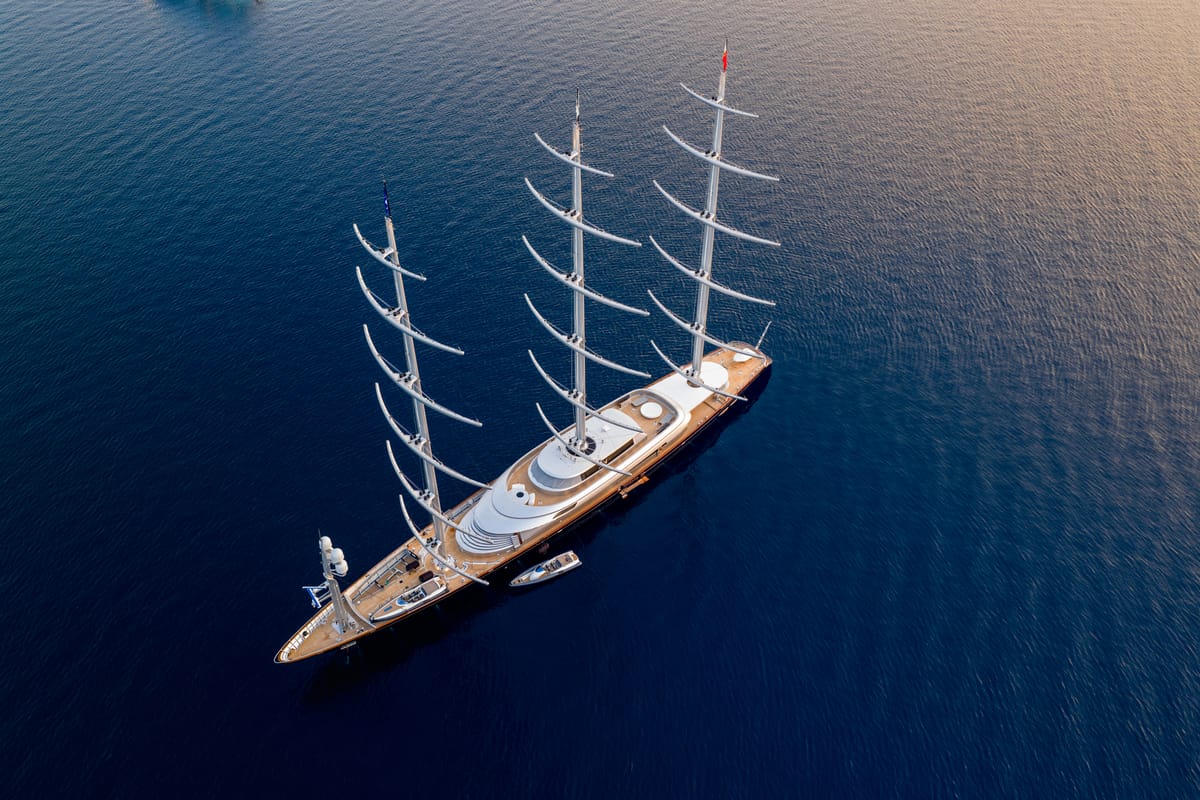
There are vessels that follow the established principles of naval architecture, and there are vessels that rewrite them. The 88-metre Maltese Falcon is firmly in the latter category. When it was launched by Perini Navi in 2006, it was not merely a new sailing yacht; it was a philosophical statement rendered in steel and carbon fiber. It was the manifestation of a radical concept, a vessel that fused the romantic power of a 19th-century clipper ship with the technical execution of a 21st-century spacecraft.
To analyze the Maltese Falcon is to study a perfect union of craft and command, where the artistry of its design is inseparable from the mastery of its operation. It is a dossier on a vessel that proved a revolutionary theory and, in doing so, created a new language for performance sailing.
THE PRINCIPAL'S GAMBIT
The story of the Maltese Falcon begins not with a naval architect, but with its principal, the late Tom Perkins. A legendary Silicon Valley venture capitalist, Perkins was instrumental in funding companies like Genentech and Google. He approached the project with the same mindset: a high-risk, high-reward investment in a disruptive technology. His directive was not simply to build a large sailing yacht, but to solve a century-old engineering problem: how to harness the immense power of a square-rigged sail plan without the commensurate complexity and manpower that had rendered such vessels obsolete. It was a challenge of efficiency and control.
Perkins acquired the rights to the "DynaRig," a concept first developed in the 1960s by German engineer Wilhelm Prölss. The concept had remained largely theoretical, a fascinating but unproven idea waiting for a principal with the vision, capital, and appetite for risk to bring it to life [Dykstra Naval Architects]]. Perkins funded the research and development himself, assembling a world-class team to turn theory into reality.

THE CRAFT: ENGINEERING A REVOLUTION
The technical execution of the DynaRig is a masterclass in modern naval architecture and materials science.
The DynaRig System
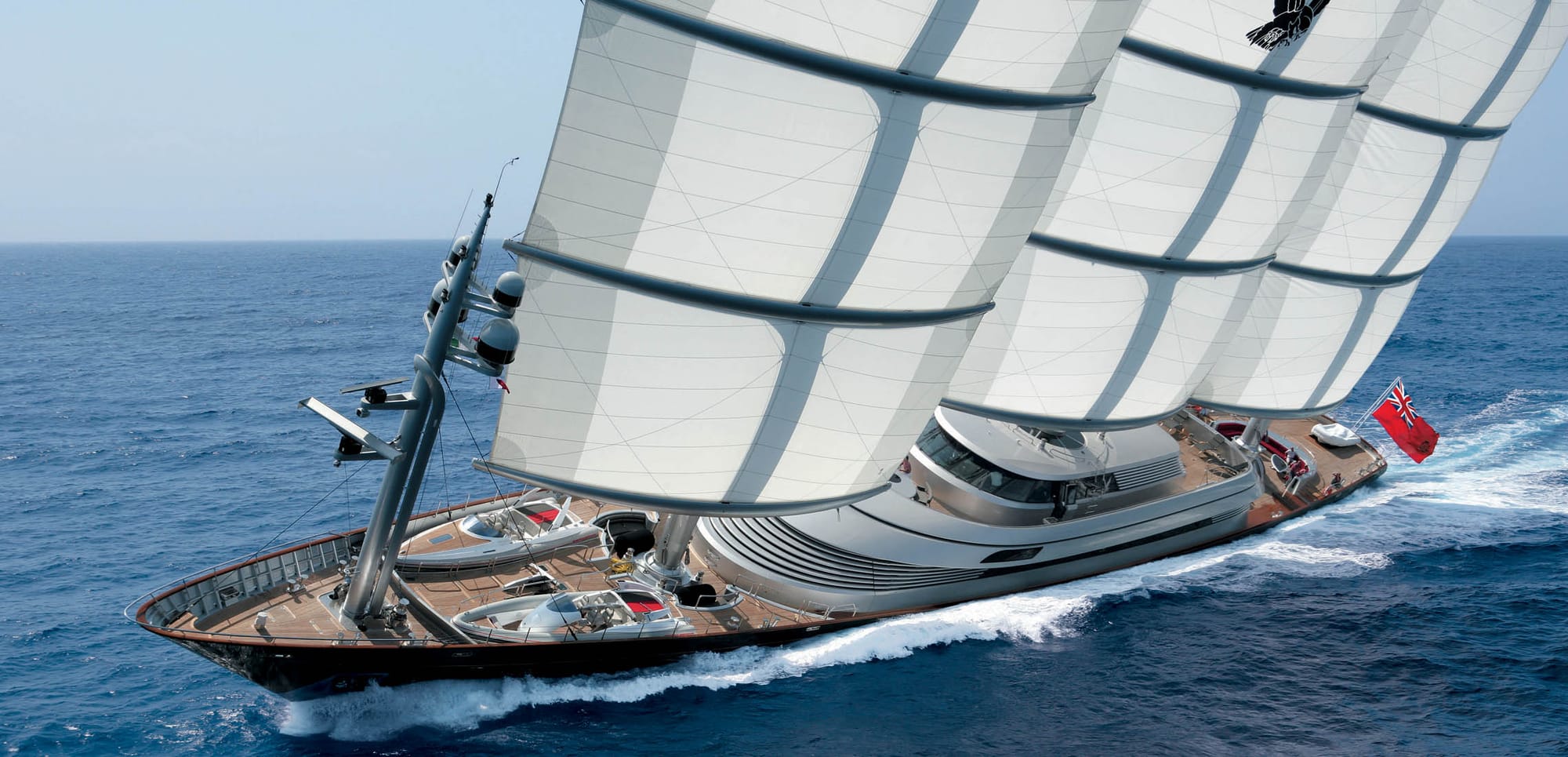
The heart of the vessel is its revolutionary rig. Unlike a traditional sailing yacht, which relies on a complex web of stays and shrouds to support its masts, the Maltese Falcon's three 58-metre masts are freestanding cantilevers. Engineered by Insensys and fabricated in Turkey, these carbon-fiber structures are among the largest of their kind in the world. They are designed to rotate in their bases via powerful hydraulic motors. This rotation is what trims the sails to the wind, a fundamental departure from all conventional sailing.
Fifteen square sails, providing a total of 2,400 square meters of sail area, are stored inside the masts. When deployed, they unfurl along tracks built into the five carbon-fiber yards on each mast. This intricate system of motors, sensors, and tracks allows for the precise and automated control of a vast sail area that would have been unimaginable a generation ago. The key aerodynamic advantage is the lack of "parasitic drag" from traditional rigging, allowing for a much cleaner airflow across the sails and generating significantly more power.
The Hull and Integration
The esteemed Italian shipyard Perini Navi, known for its expertise in building large, complex sailing yachts, was tasked with integrating this radical rig into a hull of superlative quality. The challenge was immense. The forces generated by the DynaRig are entirely different from those on a conventional yacht. The loads are concentrated at the base of the masts, requiring a massively reinforced steel hull and a sophisticated bearing system to handle the immense torque. The shipyard's ability to execute this integration flawlessly was critical to the project's success.
THE INTERIOR ARCHITECTURE
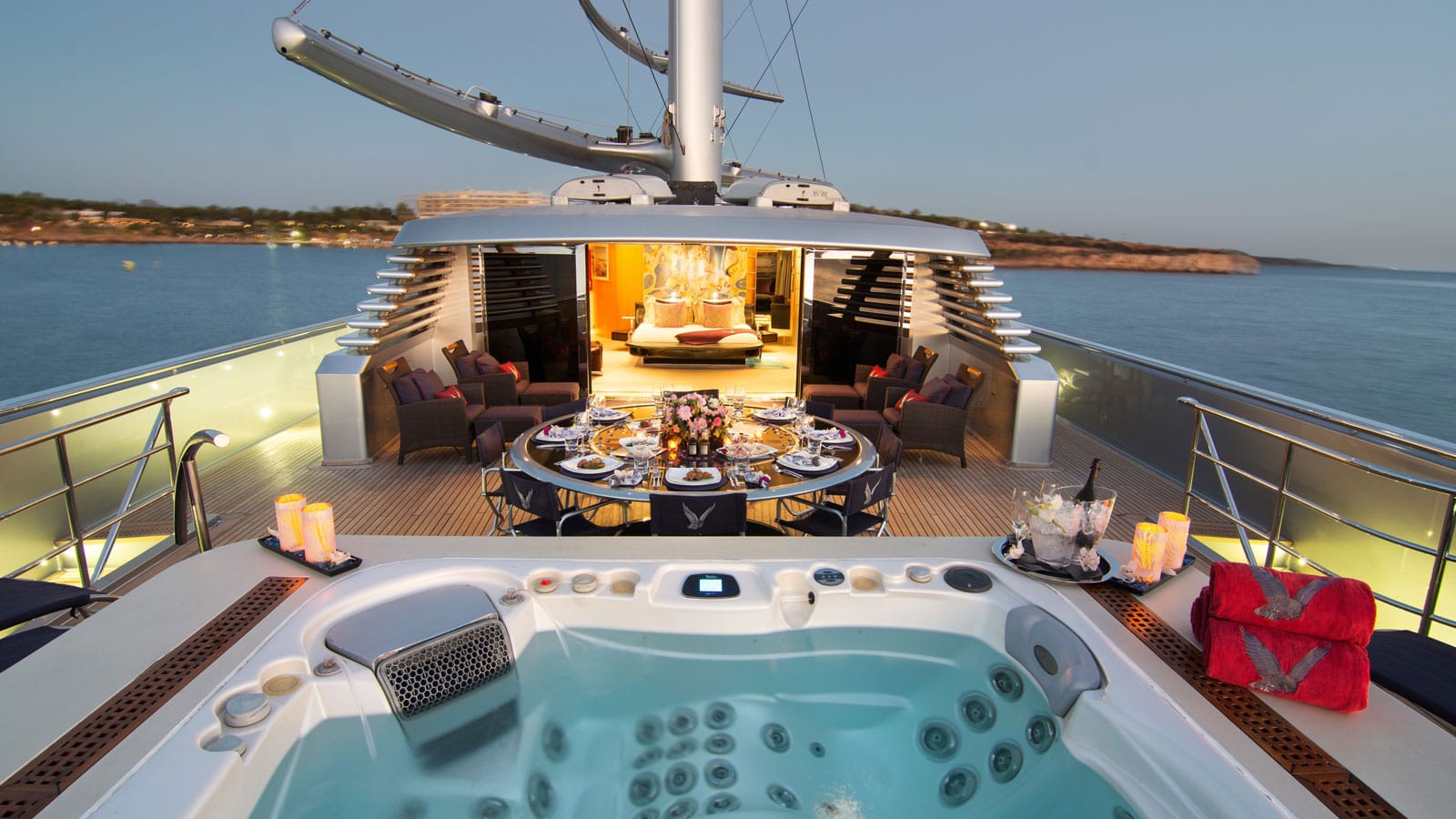
The interior, designed by Ken Freivokh, is a modern masterpiece of industrial-chic. It is a design that celebrates, rather than hides, the vessel's engineering. A central, three-deck atrium is formed by a dramatic spiral staircase that encircles the main mast. As the mast rotates to trim the sails, it becomes a piece of kinetic sculpture at the very heart of the living space. Transparent floor sections allow guests to look down into the lower decks, creating a sense of openness and connection to the machine itself. This is a design philosophy where the vessel's technology is the central aesthetic.
THE COMMAND: MASTERY THROUGH DATA
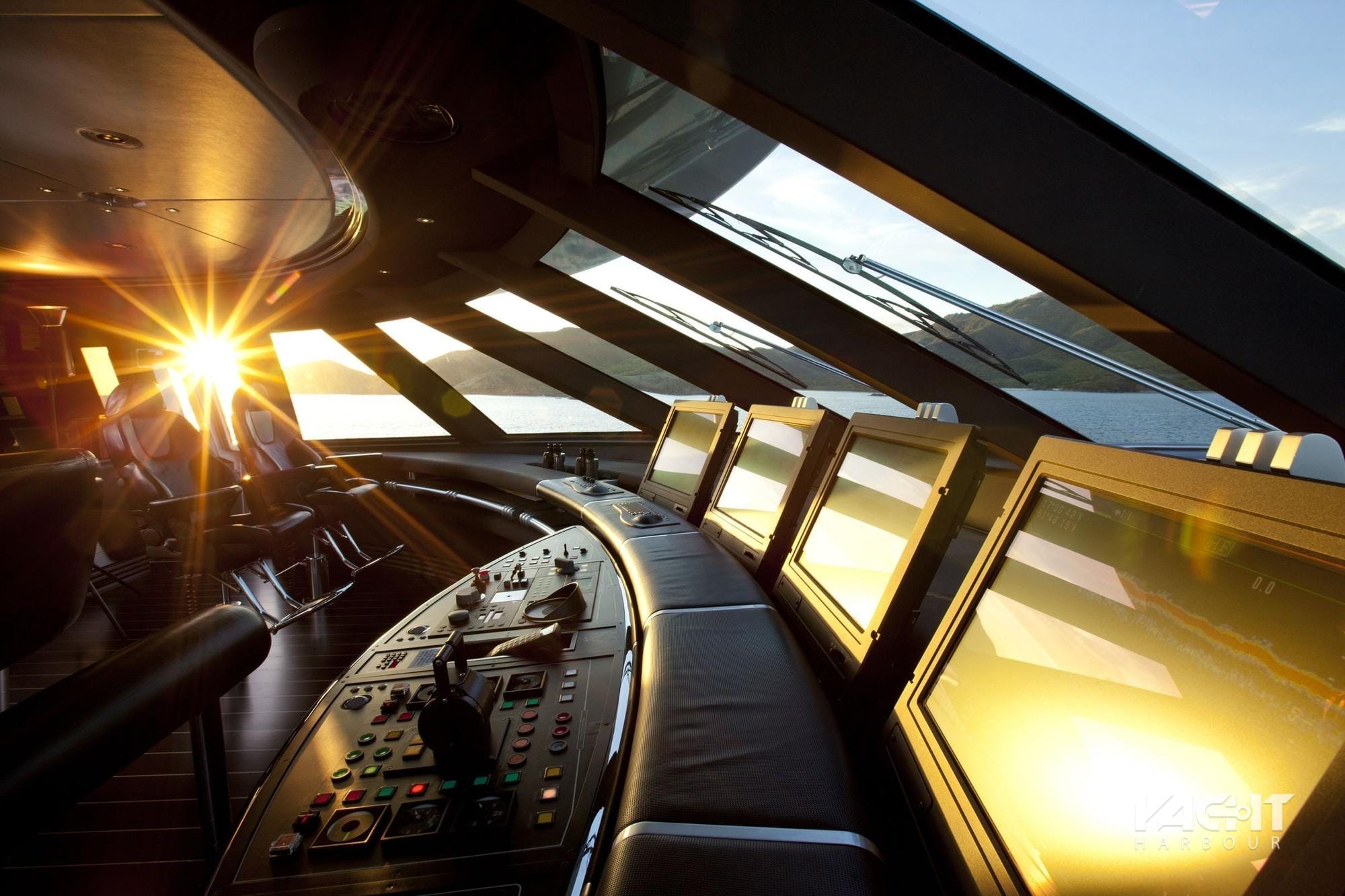
The DynaRig’s true genius lies in how it transforms the very nature of command. A single operator can deploy all fifteen sails in under six minutes from the "Falcon Rig" touch-screen helm station.
The bridge is a nerve center. The operator is presented with a clean, graphical interface showing the status of each mast and sail. The system's proprietary software, fed by a network of wind and load sensors, continuously calculates the optimal sail trim and mast rotation for any given wind condition. An anti-collision feature can even automatically de-power and furl the sails if it detects an obstruction, a level of integration between sail and safety systems never before seen. Commanding the Maltese Falcon requires a unique synthesis of skills: a deep understanding of traditional sailing principles, but also the technical acumen to master a system more akin to an aircraft's fly-by-wire controls than a traditional helm.
PERFORMANCE AND LEGACY
The result of this synthesis of craft and command is a level of performance that was previously unimaginable for a vessel of this scale. It can tack in under 90 seconds and has achieved a recorded top speed of 24.9 knots under sail. In 2008, it completed a transatlantic crossing in just ten days [Perini Navi]]. This speed and maneuverability grant the vessel a strategic advantage, allowing it to outrun unfavorable weather systems and undertake long passages with remarkable efficiency.
The Maltese Falcon is more than a single, extraordinary vessel. Its greatest legacy is that it served as the definitive proof of concept for the DynaRig. It de-risked a revolutionary technology, demonstrating its viability and reliability to the world. Its success paved the way for the next generation of DynaRig vessels, such as the 106-metre Black Pearl built by Oceanco, proving that Tom Perkins's vision was not a one-off curiosity, but a powerful and enduring contribution to the future of sailing.